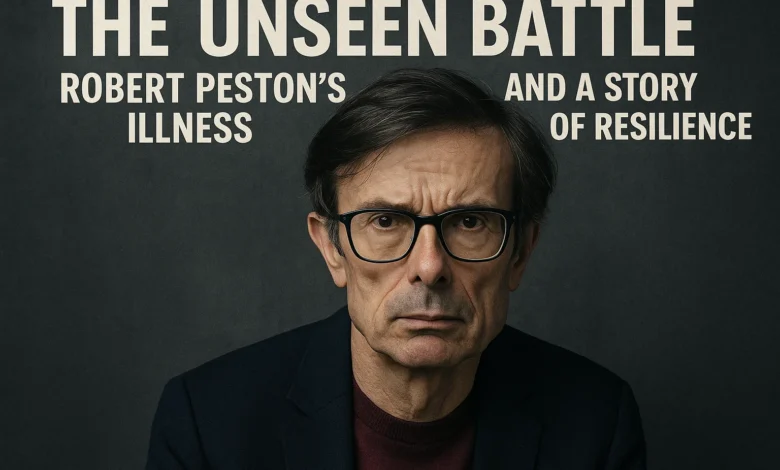
We are used to seeing him on our screens, a stalwart of British political journalism, delivering the news with a distinctive, earnest style. Robert Peston is, for many, the face of Westminster intrigue and economic breakdowns. His voice, sometimes halting, is one of authority and experience. But behind the public persona and the relentless pace of breaking news, a deeply personal and challenging story unfolded—a story that involves not just his own health scare, but a profound family tragedy that reshaped his entire world. This is not a tale of a single event, but a journey through grief, resilience, and the re-evaluation of what truly matters. The phrase “robert peston illness” often leads people to search for a specific diagnosis he received, but the reality is far more layered, encompassing his own physical ailment and the emotional devastation of losing his wife to cancer. This article delves into that complete picture, exploring how personal crisis impacted one of the UK’s most recognizable journalists, how he coped, and the powerful advocacy that emerged from his pain.
To understand the context of Robert Peston’s own health is to first understand the backdrop against which it occurred. For years, his life was a whirlwind of deadlines, political scoops, and the high-pressure environment of ITV News, where he serves as Political Editor. His career was, by all accounts, soaring. But in 2012, his world was irrevocably changed when his wife, the author and journalist Siân Busby, was diagnosed with lung cancer. The subsequent years were a harrowing blend of caring for her, raising their son, and maintaining his demanding career. Siân sadly passed away in September 2012, leaving Peston a widower and a single father. It was in the shadow of this immense loss that the story of his own physical vulnerability began, a period where the stresses of life seemingly manifested in a sudden and frightening physical symptom.


The Sudden Health Scare That Shook a Journalist
The public first became aware that something was amiss with Robert Peston not through a formal announcement, but through his own visible change. In early 2020, viewers and colleagues began to notice a significant drooping on the left side of his face. For a television presenter whose face is their instrument, this was not just a private concern but a very public one. Speculation was rife. In the age of the internet, diagnoses were thrown around by armchair physicians, with many fearing the worst, such as a stroke or Bell’s Palsy. The suddenness of the change was alarming. Peston, to his credit, did not shy away from it. He addressed the issue head-on, using his public platform to explain what was happening to him, thereby transforming a personal medical issue into a moment of public education and awareness.
He revealed that he had been diagnosed with Benign Essential Blepharospasm, a rare neurological disorder. It’s crucial to understand what this condition entails. It is not a life-threatening illness, but it is a chronic and often disruptive one. The condition causes involuntary, forced closing of the eyelids due to spasms in the muscles around the eyes. In its more severe forms, it can lead to functional blindness—where a person’s vision is perfectly fine, but the spasms are so persistent that they cannot keep their eyes open to see. For Peston, this manifested as a struggle to control the muscles on one side of his face, leading to the noticeable droop and difficulty with his speech patterns, which became slightly more pronounced and labored. This was the physical reality of the Robert Peston illness that so many had wondered about.
The Diagnosis and Its Implications
Receiving a diagnosis of Benign Essential Blepharospasm is a mixed blessing. On one hand, it rules out more sinister causes like a stroke or a brain tumor—a massive relief for anyone. The term “benign” signifies that it is not fatal. However, the word “essential” in medical parlance often means “of unknown cause,” which can be frustrating for a patient seeking answers. For a journalist like Peston, whose work relies on reading documents, looking at screens, and engaging in face-to-face communication, the symptoms were professionally challenging. The spasms can be triggered by fatigue, stress, and bright lights—all staples of a television studio. Imagine trying to conduct a serious interview with a political leader while fighting a constant, involuntary battle to keep your own eyes open.
The treatment path for this condition is not straightforward. There is no cure. The most common and effective treatment is the regular injection of botulinum toxin, or Botox, directly into the affected muscles around the eyes. These injections paralyze the hyperactive muscles, allowing for normal eyelid function for a period of typically three to four months. Peston has been open about undergoing this treatment, which he has described as “not particularly pleasant.” He has to schedule these injections around his work life, a constant reminder of the condition he manages. His decision to be transparent about his diagnosis and treatment was a powerful act, demystifying a rare neurological condition and showing that even high-profile individuals navigate complex health issues.
A Deeper Look at Benign Essential Blepharospasm
To fully appreciate what Robert Peston manages, it’s helpful to dive deeper into the nature of Benign Essential Blepharospasm, often simply called BEB. It is classified as a type of dystonia, which is a movement disorder characterized by sustained or repetitive muscle contractions. These contractions cause abnormal, often painful, movements and postures. In the case of BEB, the orbicularis oculi muscle, which is responsible for closing the eyelid, goes into spasm without conscious control. It’s as if the brain is sending constant, erroneous signals to these muscles, telling them to contract. The condition is progressive, meaning it can start mildly—perhaps with an increased blink rate or eye irritation—and gradually worsen over time.
The impact of BEB on daily life can be profound. Beyond the professional challenges Peston faced, simple pleasures like reading a book, driving a car, or watching a film can become arduous or impossible tasks. Sensitivity to light, known as photophobia, is a common companion symptom. Socially, the visible nature of the spasms and facial distortions can lead to self-consciousness and anxiety. The following table breaks down the key characteristics of BEB for clarity:
| Aspect of BEB | Description |
| Nature | A focal dystonia affecting the muscles around the eyes. |
| Primary Symptom | Involuntary, forced closure of the eyelids. |
| Causes | Idiopathic (unknown), though a genetic link is suspected in some cases. |
| Triggers | Fatigue, stress, bright lights, and wind. |
| Diagnosis | Primarily clinical, based on symptoms and neurological examination. |
| Primary Treatment | Botulinum toxin (Botox) injections. |
| Prognosis | Chronic and often progressive, but manageable with treatment. |
Living with BEB requires a significant amount of adaptation and resilience. Patients often have to become experts in managing their energy levels, minimizing stress, and using aids like tinted glasses to reduce light sensitivity. For Robert Peston, this meant adapting his entire approach to his high-pressure job, a testament to his determination to not let the condition define or limit him.
The Connection Between Stress and Neurological Conditions
While the direct cause of BEB remains unknown, the role of stress as a major trigger is well-established in the medical community. Stress does not cause BEB, but it can significantly exacerbate its symptoms. The body’s physiological response to stress involves the release of hormones like cortisol and adrenaline, which can heighten neurological activity and, in conditions like dystonia, amplify the faulty signals causing the muscle spasms. For anyone, a high-stress job in the public eye would be challenging, but for someone with BEB, it can directly intensify their most visible symptom.
When we consider the Robert Peston illness in the context of his life, the stress factor becomes particularly poignant. His wife’s diagnosis, her prolonged illness, and her subsequent passing represented a period of extreme emotional and psychological strain. The mind and body are not separate entities; they are deeply intertwined. The immense grief and stress of becoming a widower and a single parent undoubtedly placed an enormous burden on his entire system. It is impossible to say if this trauma triggered the onset of his BEB or simply worsened a pre-existing, latent condition, but the correlation in timing is striking. It serves as a powerful, real-world example of how emotional turmoil can manifest in physical ways, a concept that is gaining more traction in holistic medicine. As one neurologist aptly put it, “The brain records everything. Emotional trauma can sometimes find its voice through the body when the mind is too overwhelmed to process it.”
The Backdrop of Tragedy: Siân Busby’s Cancer Battle
To fully comprehend the gravity of what Robert Peston endured, one must look at the devastating personal loss that preceded his own health issues. Siân Busby was not just his wife; she was a accomplished historical writer and journalist in her own right, a beloved mother, and Peston’s partner. Her diagnosis with lung cancer, a disease she developed despite being a non-smoker, was a brutal shock to the family. The following years were a masterclass in navigating the dual roles of carer and high-profile professional. Peston would later speak about the immense difficulty of trying to be present for his wife and son while also fulfilling the inescapable demands of his job, a balancing act that countless families facing serious illness will recognize.
Siân’s battle was not a private one, by choice. Peston wrote and spoke about it with raw honesty, both during her illness and after her death. He did not shield the public from his grief or the grim realities of cancer. In doing so, he became an inadvertent advocate for countless others walking a similar path. His candid discussions about the emotional rollercoaster of hope, despair, and the sheer logistical nightmare of hospital appointments and treatments brought a human face to a disease that affects millions. The loss of Siân in 2012 left a void that is impossible to quantify. For Peston, it meant rebuilding a life for himself and his son from the ground up, all while in the relentless glare of the public eye.
Grief as a Catalyst for Change
The experience of profound loss changes a person fundamentally. For Robert Peston, the death of his wife acted as a catalyst, forcing a re-evaluation of his life and priorities. While he remained dedicated to his journalism, his perspective shifted. He became more vocal about the importance of the National Health Service (NHS), having witnessed first-hand the dedication of its staff during Siân’s treatment. His personal tragedy also seemed to deepen his empathy and the emotional tenor of his reporting. Where once he might have been seen purely as a political technician, there now appeared a greater sensitivity to the human impact of policy and economic shifts.
This period of grief also directly influenced his own approach to his health scare. Having faced the ultimate loss, the prospect of a non-life-threatening, albeit challenging, neurological condition likely carried a different weight. It fostered a sense of perspective that can be hard to come by. He has never framed his BEB as a tragedy, but rather as an inconvenience to be managed. This attitude is almost certainly forged in the fires of the genuine tragedy he had already survived. His resilience in the face of his Robert Peston illness is a testament to the human capacity to endure, adapt, and find a way forward, even when carrying the heavy burden of grief.
Public Perception and the Strength of Vulnerability
In a media landscape that often prizes invulnerability and slick presentation, Robert Peston’s decision to be open about his health issues was a bold and unconventional one. Many in his position might have taken extended leave or tried to conceal the symptoms with camera angles or other tricks. Peston did the opposite. He acknowledged the change in his appearance, explained the condition to his audience, and continued his work without apology. This act of public vulnerability was not a sign of weakness, but one of immense strength. It demonstrated a commitment to his profession that transcended vanity and a respect for his audience that fostered a deeper connection.
The public response was overwhelmingly supportive. Rather than diminishing his credibility, his honesty enhanced it. People saw a real person grappling with a real problem, and they admired his fortitude. It sparked conversations about invisible disabilities and the pressures faced by those in the public eye. By normalizing his condition, he reduced the stigma around it. He became a figure not just of political insight, but of human resilience. His journey with the Robert Peston illness showed that it is possible to be a leader and an authority while also being openly human, flawed, and fighting a personal battle.
The Role of Advocacy and Raising Awareness
Through simply living his life publicly with Benign Essential Blepharospasm, Robert Peston has become an unofficial ambassador for those with rare neurological conditions. Every time he appears on screen, receiving his regular treatments to manage the symptoms, he is raising awareness. For the thousands of people living with BEB or other forms of dystonia, seeing a well-respected figure like Peston navigate the same challenges is incredibly validating. It tells them they are not alone and that their condition does not have to limit their potential or define their identity.
His platform has given a voice to a community that often struggles to be heard. Rare diseases frequently suffer from a lack of research funding and public understanding. By associating his name with BEB, Peston has inadvertently directed a spotlight onto this niche area of neurology. He has shown that managing a chronic illness is a part of his life, but it is not his whole story. This is a powerful message for anyone newly diagnosed with a chronic condition: life goes on, and it can be a full, successful, and meaningful life. His advocacy, though unintentional, has had a tangible impact, reminding us of the responsibility that comes with a public profile and the good that can be done by simply telling the truth about one’s own experience.
Life After Diagnosis: Adaptation and Moving Forward
So, how does Robert Peston manage his condition today? The answer lies in a combination of medical intervention and personal adaptation. The regular Botox injections are the cornerstone of his management plan, allowing him to control the muscle spasms and maintain his ability to work on television. He has spoken about the need to plan his life around these treatments, ensuring he is fit and ready for major political events like budgets or elections. It has become a routine, if unpleasant, part of his professional maintenance, no different than a athlete undergoing physiotherapy.
Beyond the injections, he has likely had to make subtle but significant lifestyle adjustments. Managing stress is no longer a luxury but a medical necessity. This might involve a more disciplined approach to work-life balance, ensuring he gets adequate rest, and finding effective ways to decompress. The death of his wife and his own health scare have undoubtedly given him a sharper perspective on what is truly important. He continues to be one of the UK’s most prolific journalists, writing books, hosting his ITV show, and being a prominent voice on social media. He has not allowed Benign Essential Blepharospasm to sideline him; instead, he has integrated its management into the fabric of his life, a remarkable feat of perseverance.
The Intersection of Personal and Professional Life
The story of the Robert Peston illness is ultimately a story about the inseparability of our personal and professional selves. We often try to compartmentalize, to put on a brave face and leave our problems at the door. But Peston’s experience demonstrates that this is not always possible, nor is it always desirable. His personal tragedies and health challenges have inevitably shaped the journalist he is today. They have added layers of depth and empathy to his reporting, making him more attuned to the human stories behind the political headlines.
His journey offers a lesson in acceptance and forward momentum. He accepted the diagnosis, he accepted the treatment, and he accepted the new reality of his life. There is no sense of self-pity in his public discussions of the condition, only a pragmatic determination to carry on with the work he loves. This resilience, forged in the crucible of personal loss and physical challenge, is perhaps his most defining characteristic. It is a quality that resonates deeply with an audience who, in their own ways, are also navigating the various challenges life throws their way. Robert Peston is no longer just a political journalist; he is a symbol of the fact that our struggles do not have to break us—they can become part of our story, but they don’t have to write the ending.
Conclusion
The narrative surrounding “Robert Peston illness” is far more than a medical case study. It is a profoundly human story that weaves together personal tragedy, physical vulnerability, public scrutiny, and ultimate resilience. The search for information about his health leads not to a simple explanation, but to a complex tapestry of events that includes his wife’s courageous battle with cancer, his own diagnosis with a rare neurological disorder, and his very public journey of coping and adaptation. Robert Peston’s experience teaches us about the invisible links between emotional trauma and physical health, the power of vulnerability in a world that often shuns it, and the incredible capacity of the human spirit to persevere. He has managed his Benign Essential Blepharospasm not as a hidden shame, but as a manageable part of a full and impactful life. His story is a powerful reminder that health is holistic, encompassing both mind and body, and that true strength lies not in being invincible, but in how we choose to respond when we are, inevitably, vulnerable.
Frequently Asked Questions (FAQs)
<h4>What was the actual Robert Peston illness?</h4> The specific health condition that affected Robert Peston’s face and speech is Benign Essential Blepharospasm (BEB). This is a rare neurological disorder that causes involuntary spasms and forced closure of the eyelids. It is not life-threatening but is a chronic condition that can significantly impact daily life and vision.<h4>Is Robert Peston’s condition life-threatening?</h4> No, Benign Essential Blepharospasm is not a life-threatening illness. The term “benign” in its name explicitly means it is not fatal. However, it is a chronic and often progressive condition that requires ongoing management, typically with regular Botox injections, to control the symptoms and maintain quality of life.<h4>How did Robert Peston’s wife pass away?</h4> Robert Peston’s wife, Siân Busby, was a talented author and journalist. She was diagnosed with lung cancer and, despite not being a smoker, she battled the disease for several years. Her illness and the period of caring for her was an immensely difficult time for Peston and their family. She sadly passed away from the disease in September 2012.<h4>What is the connection between stress and Robert Peston’s health issues?</h4> While stress does not cause Benign Essential Blepharospasm, it is a well-known and powerful trigger that can significantly worsen its symptoms. The period leading up to Peston’s diagnosis was marked by extreme stress and grief following his wife’s cancer battle and death. This immense emotional burden likely played a role in either triggering the onset or exacerbating the severity of his neurological condition.<h4>How does Robert Peston manage his illness while working on TV?</h4> Robert Peston manages his condition primarily through regular injections of botulinum toxin (Botox) into the muscles around his eyes. These injections paralyze the hyperactive muscles, reducing spasms and allowing him to control his eyelids for a period of three to four months. He schedules these treatments around his work commitments and has adapted to the demands of his career while managing this chronic health issue.