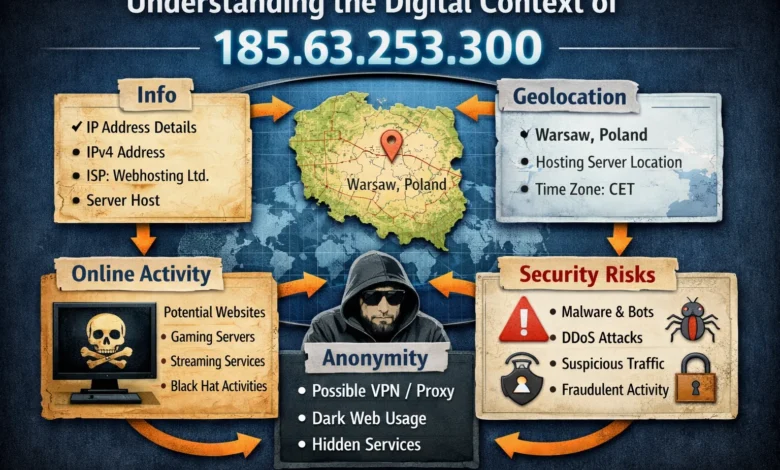
The keyword 185.63.253.300 has recently drawn attention in online discussions, technical forums, and search queries, largely because it appears to resemble a structured numerical identifier commonly associated with digital systems. When users encounter such a sequence, curiosity naturally follows, as people want to understand what it represents, how it is used, and why it shows up in different online environments.
In the modern digital landscape, strings like 185.63.253.300 are often linked to conversations about networking, cybersecurity awareness, and the way information is organized across the internet. While to the average reader it may look like a random set of numbers, its format suggests a deeper connection to how devices, servers, and online services communicate with each other in a structured and traceable way.


The Structure and Perception Behind Numerical Identifiers
At first glance, 185.63.253.300 appears technical, even intimidating, especially for readers who are not familiar with networking concepts. Numbers arranged in this manner are commonly associated with addressing systems that help computers recognize one another. This structured format is not accidental; it reflects decades of digital evolution aimed at making global communication efficient and reliable.
For many users, encountering 185.63.253.300 sparks questions about safety, legitimacy, and purpose. People may wonder whether such a number is harmless, informational, or something they should approach with caution. This reaction highlights how numerical identifiers have become symbols of both connectivity and vulnerability in the digital age.
Why Such Identifiers Appear Online
The appearance of 185.63.253.300 in articles, logs, or discussions often ties back to the transparency of modern technology. Systems record numerical identifiers to track activity, manage traffic, and ensure smooth data transfer. These records sometimes become visible to users through analytics tools, error messages, or public discussions.
Another reason 185.63.253.300 may surface online is education. Writers, developers, and educators frequently use realistic-looking examples to explain complex technical ideas in a practical way. By referencing a specific sequence, explanations feel more grounded and easier to follow, even for readers with limited technical backgrounds.
The Role of Awareness in a Connected World
Understanding the context around 185.63.253.300 is part of a broader need for digital literacy. As more daily activities move online, users are increasingly exposed to technical details that were once hidden behind the scenes. Learning to recognize and interpret these details helps reduce confusion and unnecessary fear.
When users see 185.63.253.300, awareness allows them to pause and evaluate the situation rationally. Instead of assuming danger or ignoring it entirely, informed users can consider where they encountered it and what function it might serve in that specific context.
Misconceptions and Common Assumptions
One common misconception about 185.63.253.300 is that any unfamiliar numerical string automatically signals a threat. While caution is healthy, not every technical identifier is malicious. Many are simply part of normal system operations, appearing during routine processes such as diagnostics or demonstrations.
Another assumption is that 185.63.253.300 must belong to a specific organization or entity. In reality, numbers formatted this way are often abstract references in discussions, tutorials, or hypothetical scenarios. Separating assumption from fact is essential for maintaining a balanced understanding of digital information.
Educational Value of Technical Examples
From an educational perspective, 185.63.253.300 serves as a useful anchor for explaining how digital systems categorize and reference information. Abstract explanations can be difficult to grasp, but concrete examples help bridge the gap between theory and practice. This is why educators often rely on specific-looking identifiers in their content.
By analyzing 185.63.253.300 within a learning context, readers can become more comfortable with technical language. Over time, repeated exposure reduces intimidation and builds confidence, making it easier to explore more advanced topics without hesitation.
Digital Curiosity and Responsible Interpretation
Curiosity is a powerful driver of learning, and encountering 185.63.253.300 can be the starting point for deeper exploration. The key is responsible interpretation, which involves checking context, understanding intent, and avoiding rushed conclusions. This mindset encourages growth rather than anxiety.
When readers approach 185.63.253.300 thoughtfully, they transform a moment of confusion into an opportunity for knowledge. This shift reflects a broader cultural change where digital literacy is becoming as essential as traditional reading and writing skills.
The Broader Conversation About Online Transparency
The presence of 185.63.253.300 in public-facing content also highlights how transparent modern systems have become. Information that once stayed behind closed doors is now accessible, searchable, and open to interpretation. This transparency empowers users but also demands greater responsibility in how information is shared and understood.
Seeing 185.63.253.300 reminds readers that the internet is built on layers of structured data. Each visible element represents countless invisible processes working together to deliver seamless online experiences across the globe.
Conclusion: Making Sense of the Numbers
Ultimately, 185.63.253.300 represents more than just a string of digits. It symbolizes the complexity of digital communication and the importance of understanding what we encounter online. Numbers like these are part of the infrastructure that supports modern life, even when they appear out of context.
By developing awareness and critical thinking, readers can approach 185.63.253.300 with clarity rather than confusion. As digital environments continue to evolve, the ability to interpret such identifiers will remain a valuable skill, helping users navigate the online world with confidence and insight.