Simon Anthony Blackburn: A Comprehensive Insight into the Philosopher’s Life and Legacy

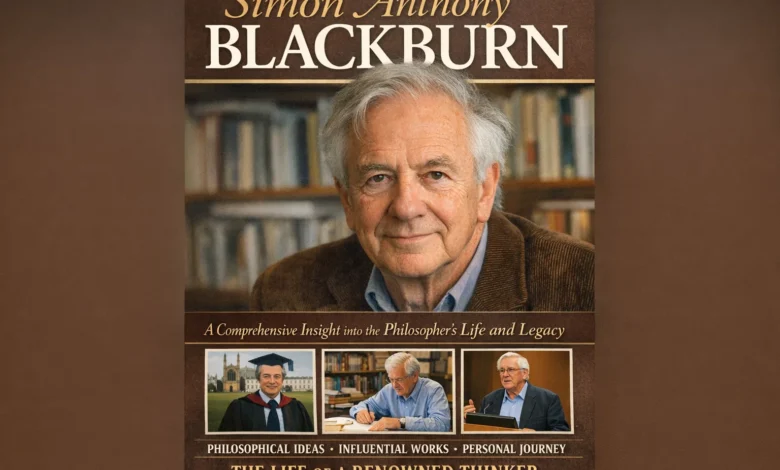
Understanding Simon Anthony Blackburn’s Contributions to Philosophy
Simon Anthony Blackburn is a name that resonates strongly in contemporary philosophical discourse. Known for his profound contributions to moral philosophy, metaethics, and the philosophy of language, Blackburn has established himself as one of the most influential thinkers of his generation. His work bridges the gap between traditional philosophical concerns and modern analytical rigor, making philosophy accessible to both academics and general readers. Born in 1944, Blackburn’s intellectual journey reflects a persistent dedication to understanding the nature of morality, knowledge, and human reasoning.


From the outset of his career, Blackburn demonstrated a remarkable aptitude for critical thinking. His education laid the foundation for a life devoted to philosophical inquiry. He studied at prestigious institutions, where he was exposed to a diverse range of philosophical traditions, enabling him to develop a broad yet incisive perspective on ethical and metaphysical questions. This background allowed him to engage with the pressing issues of his time while also drawing upon the rich history of philosophical thought. Blackburn’s ability to synthesize complex ideas and present them with clarity has been a defining feature of his career.
One of the most significant areas of Blackburn’s work is moral philosophy. He is particularly noted for his defense of quasi-realism, a position that seeks to explain the way we talk about moral values without committing to the existence of objective moral facts. Quasi-realism is a sophisticated philosophical stance that allows for moral discourse to be meaningful while maintaining a critical perspective on moral objectivity. simon anthony blackburn Blackburn’s approach challenges traditional views, offering a nuanced understanding of how ethical language functions in our daily lives. This theory has sparked extensive debate among philosophers, contributing to ongoing discussions about the nature of morality and the role of ethical reasoning.
Blackburn’s interest in metaethics extends beyond theoretical exploration. He has consistently aimed to clarify how ethical concepts operate in practice. By examining the underlying assumptions of moral judgments, he provides insight into how humans navigate questions of right and wrong. This focus on practical implications underscores Blackburn’s belief that philosophy should engage with the realities of human life. His work encourages readers to consider not only what morality is but also how it shapes our interactions, decisions, and understanding of justice. In this way, Blackburn connects abstract philosophical inquiry with tangible ethical concerns.
Another crucial aspect of Blackburn’s scholarship is his contribution to the philosophy of language. He has explored how language shapes our understanding of the world and our moral landscape. simon anthony blackburn Blackburn argues that linguistic practices are deeply intertwined with ethical reasoning, suggesting that the way we express our values and beliefs has significant philosophical implications. This intersection of language and morality highlights Blackburn’s commitment to examining the foundations of human thought. By investigating how words convey meaning, he provides a framework for understanding the complex relationship between communication, knowledge, and ethical reflection.
Throughout his career, Blackburn has been recognized for his ability to engage with a wide audience. Unlike many philosophers whose work remains confined to academic circles, Blackburn has sought to make philosophical ideas accessible and relevant. simon anthony blackburn His writing is characterized by clarity, wit, and an approachable style that appeals to both scholars and general readers. Books and essays by Blackburn often combine rigorous argumentation with engaging examples, demonstrating that philosophical reflection is not only intellectually stimulating but also relevant to everyday life. This accessibility has contributed to his reputation as a public intellectual, bridging the gap between scholarly debate and broader societal discourse.
In addition to his philosophical writings, Blackburn has played an influential role in academia. He has held prestigious positions at leading universities, where he has mentored students, guided research, and contributed to the development of philosophical curricula. simon anthony blackburn His teaching philosophy emphasizes critical thinking, encouraging students to question assumptions and engage deeply with complex ideas. By fostering intellectual curiosity and rigorous analysis, Blackburn has influenced generations of philosophers, leaving a lasting impact on the academic community. His legacy as an educator is intertwined with his scholarly work, reflecting a commitment to nurturing thoughtful, reflective minds.
Blackburn’s influence is also evident in his participation in public debates on ethical and social issues. He has contributed to discussions on topics such as human rights, moral responsibility, and the ethical implications of scientific advancements. simon anthony blackburn By applying philosophical reasoning to contemporary challenges, Blackburn demonstrates the practical value of philosophical inquiry. His engagement with public discourse underscores the relevance of philosophy in shaping societal norms and guiding ethical decision-making. This combination of academic rigor and public engagement distinguishes Blackburn as a thinker who bridges theoretical insight with real-world application.
Moreover, Blackburn has received numerous accolades in recognition of his contributions to philosophy. His work has been acknowledged for its originality, depth, and influence on both ethical theory and philosophical methodology. simon anthony blackburn These honors reflect the esteem in which he is held by the philosophical community and affirm the significance of his ideas in shaping contemporary thought. Blackburn’s recognition extends beyond awards, as his writings continue to serve as essential references for scholars, students, and anyone interested in moral and philosophical questions. His intellectual legacy is characterized by both the breadth of his contributions and the enduring relevance of his insights.
One of Blackburn’s most celebrated achievements is his ability to integrate philosophical traditions while advancing innovative theories. simon anthony blackburn He engages deeply with the works of classical philosophers, such as Aristotle and Kant, while simultaneously addressing modern philosophical challenges. This synthesis of historical perspective and contemporary analysis allows Blackburn to offer original contributions that are firmly rooted in tradition yet forward-looking. By balancing respect for philosophical heritage with innovative thinking, he exemplifies the dynamic nature of philosophical inquiry and demonstrates how timeless questions can be approached in fresh, meaningful ways.
Blackburn’s writing also reflects a keen awareness of the human condition. His exploration of moral and ethical questions is grounded in an understanding of human emotions, motivations, and social dynamics. He recognizes that philosophical inquiry is not abstract or detached but intimately connected to the complexities of human life.simon anthony blackburn This perspective imbues his work with a sense of empathy and realism, highlighting the ways in which philosophy can illuminate the challenges and responsibilities inherent in ethical living. By considering both theoretical and practical dimensions, Blackburn offers a holistic approach to philosophical reflection.
Beyond his individual contributions, Blackburn has played a pivotal role in shaping contemporary philosophical discourse. simon anthony blackburn His ideas have inspired debate, research, and collaboration across multiple domains of philosophy. Scholars continue to engage with his theories, refining, challenging, and expanding upon his work. This ongoing dialogue demonstrates the vitality of Blackburn’s contributions and underscores his position as a central figure in modern philosophical thought. His influence extends across generations and geographies, affirming the global impact of his scholarship.
Blackburn’s impact is not limited to philosophy alone. His work intersects with fields such as cognitive science, psychology, and sociology, reflecting the interdisciplinary nature of his approach. simon anthony blackburn By exploring how ethical reasoning interacts with human cognition and social behavior, Blackburn contributes to a broader understanding of moral and intellectual development. This interdisciplinary perspective enhances the relevance of his ideas, demonstrating that philosophical inquiry is both foundational and integrative, capable of informing diverse areas of knowledge.
Finally, Simon Anthony Blackburn’s enduring legacy lies in his ability to combine intellectual rigor with accessibility, historical awareness with contemporary relevance, and theoretical depth with practical insight. He exemplifies the role of the philosopher as both a thinker and a communicator, someone who probes the deepest questions while remaining connected to the lived experiences of individuals and society. His work invites readers to reflect critically on the nature of morality, knowledge, and human reasoning, fostering a richer understanding of the world and our place within it.
In conclusion, Simon Anthony Blackburn stands as a towering figure in modern philosophy. His contributions to moral philosophy, metaethics, and the philosophy of language have left an indelible mark on the field, shaping both academic discourse and public understanding. Through his accessible writing, innovative theories, and commitment to ethical inquiry, Blackburn demonstrates the power of philosophy to illuminate the human experience. His intellectual journey serves as an inspiration to scholars, students, and anyone seeking to engage with the fundamental questions of life, morality, and knowledge. The legacy of Simon Anthony Blackburn is not only in the theories he developed but also in the enduring influence of his thought, which continues to resonate across philosophical communities worldwide.